Latest News
Land and Property Professionals
We sell, rent, manage, survey, plan and advise...what can we do for you?
01234 352201 (Professional services and general enquiries)
Buckingham: 01280 428010
We sell, rent, manage, survey, plan and advise...what can we do for you?

No two projects are alike, and the relative freedom of design and differing construction methods makes for many options and choices.
The following guide has been designed to illustrate the general process in the run up to construction and the requirement for suitable drawings and technical expertise.
It is always important to take professional advice, and Robinson & Hall’s Building and Project Consultancy team would be pleased to advise you from inception through to the completion of your project.
Step 1: Have a Clear Vision and Detailed Brief
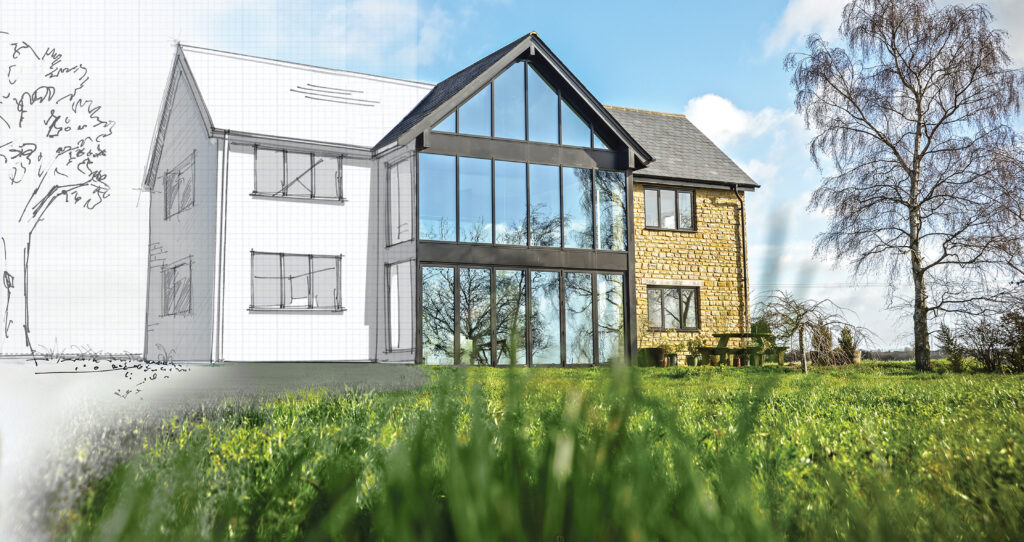
It is important to know exactly what you want to get from your site or buildings, and we can assist you in understanding how you might be able to achieve it. The brief should outline the key aspects of the design such as the accommodation you require, the size of the structure, your budget, practical considerations, energy efficiency requirements, and any other aspirations that are imperative to the character of the development.
Step 2: Appoint a Principal Designer
Robinson & Hall has a wealth of experience and is well placed to act as Principal Designer in accordance with The Construction (Design and Management) Regulations 2015 (CDM 2015). It is essential that this appointment is formalised in writing; otherwise, the duties of the Principal Designer will remain with the client (together with the associated statutory responsibilities that apply when commissioning construction work).
As-built documents and previous construction records must be collated to provide information to the Principal Designer to assist in designing the new construction works and to understand risks and construction details from previous phases of construction.
Step 3: Carry Out a Measured Survey

Measured surveys involve taking measurements of sites or buildings and will enable our designers to produce accurate plans. These plans are essential for any planning application and can also be used to annotate and illustrate any disrepair of the building, which is important in any building conversion.
Step 4: Draw up a Scheme and Submit a Planning Application
We will prepare a scheme of the proposed development, which will define the proposals and put the initial thoughts onto paper. The design package will generally include a set of floor plans, elevations, and sections as appropriate, illustrating what is being proposed. This could also include visualisations, which are really helpful to the Planner and Councillors in understanding what the development would look like when completed. Once you are happy with the scheme, it can then be submitted to the local authority as part of a planning application.
Step 5: Prepare Technical Details and Working Drawings

Once planning consent has been granted, you will also need to appoint a Principal Designer under the Building Safety Act 2022. The Building and Project Consultancy team at Robinson & Hall has extensive experience with the building regulations and is able to act as Principal Designer on your behalf.
We will then produce the technical details and working drawings required for the project. These are used to submit an application to the building control authority, where applicable, to demonstrate compliance with the Building Regulations Act. The working drawings detail the type of construction, materials to be used, dimensions, and layout. These details are also intrinsic to obtaining competitive quotations for the works.
Step 6: Appoint a Registered Building Control Approver (when the works require formal consent)
The building regulations function was historically the domain of the local authority building control department. However, regulations changed in the mid-90s to allow private companies to carry out the same function (excluding regularisation applications).
It is therefore now advisable to obtain quotes from a number of providers, including the local authority, to determine which are the most competitively priced and able to offer the highest standard of service.
Step 7: Obtain Specialist Testing Services, if Required
The Registered Building Control Approver will require relevant test certificates for the completed works. This may include electrical and gas installation certificates, water chlorination certification for new mains installations, boiler and hot water cylinder commissioning certificates, renewable installation certificates, and extractor fan test certificates. For new residential or commercial properties, a Standard Assessment Procedure assessment or Simplified Building Energy Model assessment may also be necessary. In addition, an air pressure test and Energy Performance Certificate may be required.
For residential properties with adjoining walls, acoustic testing may also be needed unless approved Robust Details are adopted and inspected during the construction process.
Step 8: Obtain As-Built Drawings
As-built drawings and construction records must be updated in accordance with CDM 2015 and provided to the client or end user. This ensures that maintenance requirements and standard operating procedures are clearly communicated and that accurate information is available for any future construction projects.
To find out more information or to discuss your building project, please contact me.
Back to articlesFor further information please contact: